
Tack & Equipment Care Instructions
Keep your saddles, bridles, and hardware durable, supple, and safe with our proven step-by-step cleaning routines, storage standards, and periodic inspection protocols.
Mastering Proper Preservation of Riding Gear
Invested leather saddles, anatomic bridles, and competition hardware endure severe perspiration, dust, and temperature fluctuations. Following a consistent cleaning schedule preserves leather suppleness, prevents seam deterioration, and maintains optimal safety for both horse and rider.
Surface Soil Evacuation
Immediately after dismounting, wipe away equine lather, sweat salts, and grit using a slightly damp microfiber cloth. Avoid oversaturating the leather pores with excessive water.
Glycerin Soap Nourishment
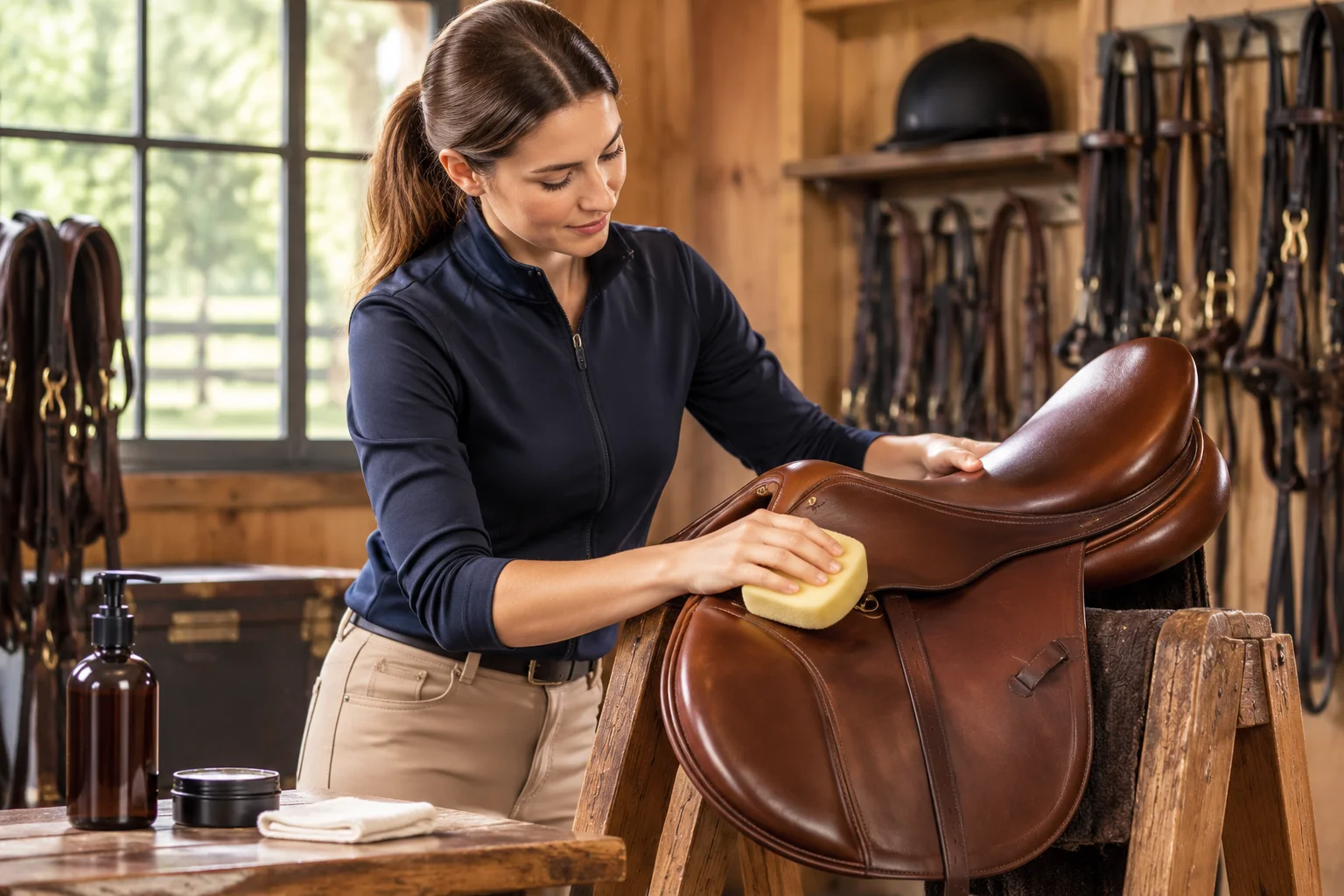
Apply traditional saddle soap or a glycerin bar using a dense foam sponge. Work in small circular motions to lift embedded sweat, wiping off excess lather before it hardens.
Balsam Conditioning
Massage a thin layer of beeswax or neatsfoot-based conditioner into supple areas. Keep oils clear of structural stitching and saddle seat balance seams to prevent stretching.
Warm Rinse & Saliva Dissolution
Submerge mouthpiece cannons and cheeks in warm water immediately after untacking. Dissolve hardened food debris and saliva film without harsh detergents that could burn sensitive oral tissue.
Burr & Joint Inspection
Slide fingertips across the entire metal surface to detect micro-burrs, worn joints, or sharp pinch points. Check stirrup eyelets and safety release hinges for metal fatigue or rust.
Non-Toxic External Luster
When prepping for horse trials, polish cheekpieces and stirrups with food-grade metal shine paste. Avoid chemical residue contact with interior mouth elements.
Saddle Pad Restoration
Allow sweat spots to dry completely before brushing out stiff residue with a rubber curry comb. Launder on delicate cycles with hypoallergenic, fragrance-free equestrian wash solutions.
Synthetic Webbing Wash
Synthetic halters, trail bridles, and webbing girths can be scrubbed in a bucket of tepid soapy water with a stiff bristle brush. Rinse clear and dry within minutes.
Shock Liner Sanitation
Neoprene girth liners and orthopedic gel pads must be disinfected after hot workouts to prevent fungal girth itch. Wipe clean and never expose to direct radiators.
Humidity & Temperature
Maintain tack room ambient relative humidity between 45% and 55%. High humidity promotes white mold sporing, while dry heated air draws natural collagen moisture from leather straps.
Breathable Protection
Shield leather saddles with soft fleece or thick cotton canvas covers. Never store tack inside sealed non-porous plastic sleeves, which trap damp condensation and trigger mold bloom.
Pre-Storage Deep Treatment
Before winter stowing, thoroughly cleanse and apply deep conditioning balsam to buckles and straps. Suspend bridles on rounded wooden blocks rather than narrow hooks to eliminate leather creasing.
Systematic Inspection Timeline
Incorporate these rapid physical inspection check-points into your regular stable routine to guarantee structural roadworthiness before entering the arena.
Check for splitting billet holes, stretched leather tongues, and broken edge stitches before tightening the girth.
Swap right and left stirrup leathers to equalize natural mounting-side stretching and preserve uniform rider balance.
Place pommel against chest and draw cantle firmly backward. Excessive play or creaking warns of internal rivet or tree fracture.
Have an accredited master saddler check wool panel distribution to eliminate hard lumps that irritate dorsal equine muscles.